
Müge Okur
One morning in Berlin, Brussels or London, a water bottle is consumed and, once used, placed in a blue recycling bin. At that moment, many people believe they are doing the right thing for the environment. The bottle is no longer ‘waste’; it is seen as a valuable raw material to be reintroduced into the economy.
However, the story does not end when the lid of the recycling bin is closed.
On the contrary, the real journey begins at that very moment.
The collected plastics are transported to local authority sorting facilities. Those that are economically viable to recycle are separated, whilst mixed and contaminated plastics become the subject of the international waste trade. As the costs of labour, energy and environmental standards are high within the European Union, a portion of this waste is shipped thousands of kilometres away. Following China’s decision in 2018 to largely halt its imports of plastic waste, the route of this trade shifted significantly, and Turkey has become one of Europe’s largest recipients of plastic waste. [1]
The journey on paper
In official records, these shipments are not classified as ‘rubbish’ but as recyclable plastic raw materials. Exporting companies bale the waste, load it into containers and hand it over to ships.
The main ports of departure include major European trade hubs such as Rotterdam, Antwerp and Hamburg. When the ships reach the Mediterranean, the cargo is unloaded at ports such as Mersin, Izmir, Ambarlı and others. From there, it is supposed to be transported to licensed recycling facilities. This chain effectively establishes a system often referred to as ‘rubbish imports’. On paper, the scenario appears quite orderly. However, this is precisely where the controversy begins.
The recycling sector, despite environmental organisations highlighting the lack of oversight and the increased environmental risks, turns a deaf ear to these concerns, arguing that this import provides raw materials for production and creates employment for thousands of people.
Why does Turkey accept this waste?
The notion frequently voiced in public discourse that ‘Europe pays Turkey to send its rubbish’ does not fully reflect the reality.
There is no ‘waste purchase’ agreement between governments. Trade is conducted between private sector companies. Recycling facilities import plastics they can process as raw materials; prices are determined according to the type of plastic, its cleanliness and international market conditions. The economic value Turkey derives comes not from the waste itself, but from its processing and reintroduction into industry. [2]
Is Turkey becoming polluted whilst Europe cleans up?
According to studies by Greenpeace Mediterranean based on Eurostat data, Turkey imported approximately 660,000 tonnes of plastic waste from European Union countries and the United Kingdom in 2020. The same study notes that the volume of plastic waste flowing from Europe to Turkey increased by approximately 196 times between 2004 and 2020. [3]
This situation has reignited the debate described by environmental organisations as ‘waste colonialism’.
According to them, developed countries are offloading a significant portion of their waste management onto other nations whilst maintaining high environmental standards. Consequently, the environmental costs of consumption are also being shifted beyond national borders.
The journey of waste does not always end in recycling
Under ideal conditions, all imported plastics should be recycled.
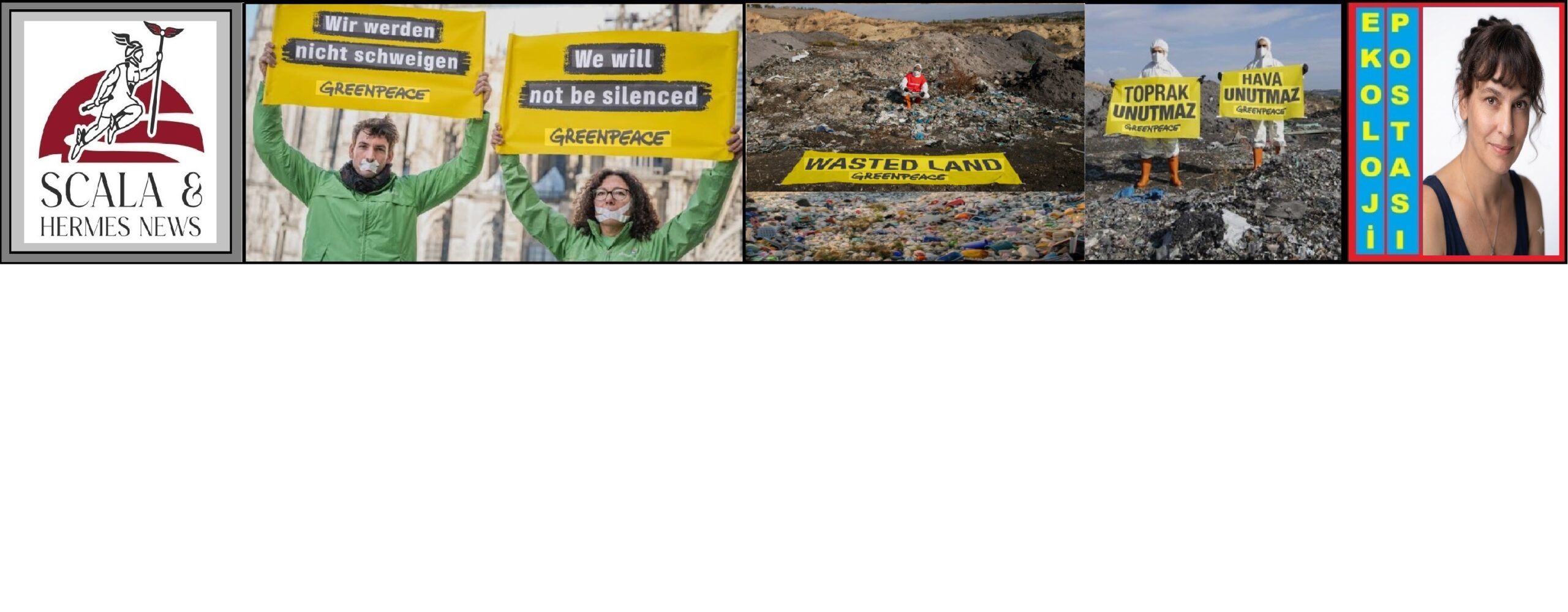
However, fieldwork carried out by Greenpeace in Adana reported that plastic packaging of European origin was found in agricultural fields, along riverbanks and on wasteland; in some areas, plastic waste was being burnt in the open. It is noted that plastic burnt in the open can release dioxins and other harmful pollutants, which could pose a risk to both the environment and human health. [4]
The Basel Action Network also argues that the increase in plastic waste exports from Europe to Turkey and other countries raises serious questions about the sustainability of global waste management. [5]
The economics of waste: Who stands to gain from this trade?
Although the trade in plastic waste may, at first glance, appear to be merely an environmental issue, it is in fact part of a global recycling economy worth billions of dollars. Material regarded as ‘rubbish’ in one country can become a valuable raw material for industry in another. Consequently, the cross-border movement of plastic waste constitutes an international trade sector shaped not only by environmental policies but also by economic interests. [6]
Recycling facilities process the plastics they import, converting them into granulated raw materials, which are then reused in sectors such as packaging, the automotive industry, textiles and construction.[7]
Consequently, the first actors to benefit economically from this chain are the businesses operating in the recycling industry. Recycled plastic, sourced at a lower cost, can in some cases offer manufacturers an economic advantage compared to the production of virgin plastic. At the same time, logistics companies, port operators and intermediary firms involved in the international waste trade are also among the economic stakeholders in this trade.[8]
However, the economic balance sheet is not limited to commercial gains alone. Experts in the field of environmental economics also highlight the hidden costs of plastic waste imports. Practices such as open-air storage, unregulated disposal or the incineration of plastics increase public expenditure on combating air, water and soil pollution, whilst negatively impacting agricultural land and public health. These costs are, more often than not, borne by society rather than by the companies in the import chain. [9]
Organisations such as Greenpeace Mediterranean and the Basel Action Network therefore argue that the trade in plastic waste must be assessed not only in terms of its economic benefits but also in terms of its environmental and social costs. These organisations emphasise that, unless developed countries move towards managing their own waste within their own borders, the environmental burden of the global waste trade will continue to be shifted onto lower-income countries. [10]
This scenario highlights the difference between the ‘economic value of waste’ and the ‘true cost of waste’. A container of plastic waste may appear in trade records merely as an imported raw material. However, the environmental damage resulting from the mismanagement of this waste can lead to economic and ecological consequences that may persist for years. Therefore, the real question is not how many dollars plastic waste is bought and sold for, but who bears the long-term cost of this trade.
Sources:
[1] Greenpeace Mediterranean. Game of Waste: The Global Plastic Waste Trade and Its Impact on Turkey. Amsterdam: Greenpeace Mediterranean 2021
[2] Greenpeace Mediterranean. Turkey Must Not Become a Plastic Dump campaign and reports on plastic waste imports.
[3] Eurostat. Waste Shipments and Exports of Recyclable Raw Materials datasets. (European Union plastic waste export statistics.)
[4] Basel Action Network (BAN). Plastic Waste Trade Data and reports on plastic waste exports from Europe.
[5] Basel Convention on the Control of Transboundary Movements of Hazardous Wastes and Their Disposal (Basel Convention). United Nations Environment Programme (UNEP)
[6] OECD. Global Plastics Outlook; assessments of the plastics economy and global waste trade.
[7] Ministry of Environment, Urbanisation and Climate Change of the Republic of Turkey. Legislation on waste imports and recycling.
[8] Eurostat. Waste Shipments and datasets on the trade in recyclable raw materials.
[9] European Environment Agency (EEA). Reports on plastic waste management and environmental costs.
[10] Greenpeace Mediterranean. Game of Waste (2021); Basel Action Network (BAN), reports on the trade in plastic waste.