
Osman Şenkul
‘Tight financial conditions will be needed until inflation is firmly on a downward path and inflation expectations approach the CBRT’s forecast range. The tight monetary policy stance must be maintained until headline inflation and inflation expectations fall within the CBRT’s forecast range. Financial conditions will tighten as inflation expectations continue to fall. Still, additional tightening may be required if inflation does not continue to fall towards a path consistent with the end-2025 target range. Capital inflows should continue to be sterilised as fully as possible to improve policy transmission. As the policy rate becomes the binding factor on credit growth, quantitative credit limits should be phased out, improving communication and enhancing monetary policy’s effectiveness. Until inflation is on a sustainable downward trend, the CBRT should smooth temporary exchange rate volatility while avoiding excessive real appreciation and opportunistically replenishing reserve buffers. As inflation falls and reserve buffers improve, intervention can be reduced, and the exchange rate can act as a shock absorber. Intervention for persistent shocks should be avoided.’
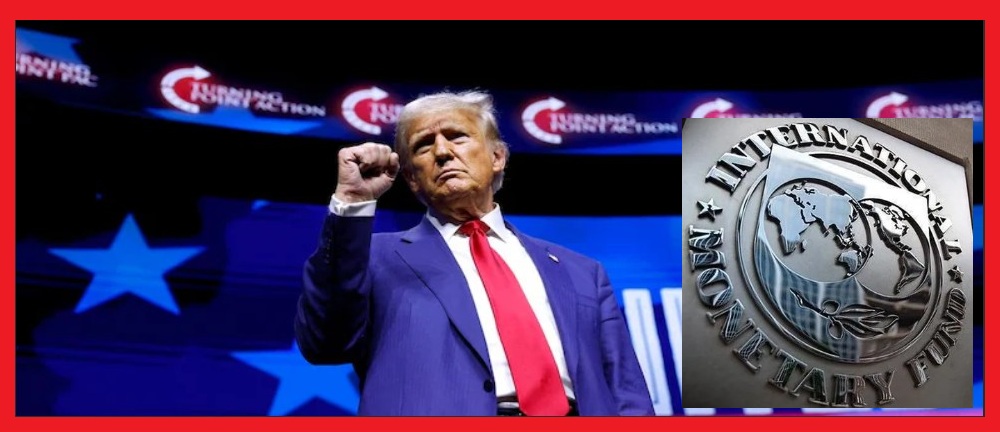
These words echo an excerpt from a statement made on 28 August 2024 by James Walsh, the leader of the International Monetary Fund (IMF) delegation and Turkey Desk Chief, who visited Turkey from 29 May to 11 June 2024 to conduct the Article 4 Consultation, following the virtual follow-up meetings held on 19-20 August 2024.
Walsh also said on 23 October, just two months after these warnings, that ‘the Central Bank needs to raise interest rates further to reach the inflation target of 14 per cent. Walsh also warned that ‘an increase in the minimum wage that would lead to higher inflation should be avoided’.
Of course, the government heeded these warnings. Despite the intense calls from the opposition and trade unions that ‘the minimum wage should be at least 30,000 liras’, the minimum wage was raised by 30 percent from 17,002 liras to 22,104 liras, fulfilling the IMF’s order.
Did it work for the government to keep the minimum wage increase within the limits demanded by the IMF despite the rising reactions? When we list these developments by going back a little, the picture we will see reflects what we have experienced to a great extent and gives us clues as to what awaits us in the future:
In the ‘Inflation Report 2024-III’ published on 8 August, the CBRT stated: ‘With 70 percent probability, inflation in 2024 is expected to be between 34 percent and 42 percent with a mid-point of 38 percent at the end of 2024; between 7 percent and 21 percent with a mid-point of 14 percent at the end of 2025; and after falling to single-digit levels and 9 percent at the end of 2026, it is expected to stabilise around the medium-term inflation target of 5 percent.’
The Inflation Report 2024 – IV announced by the CBRT on 8 November stated that ‘The year-end inflation forecast has been revised to 44 percent, 21 percent and 12 percent for 2024, 2025 and 2026, respectively’. Just before the announcement of the data for the last two months of the year (November and December), the 2024 inflation forecast, which was set at 44 percent in the revision made in November, was met with 44.38 percent.
Following these developments, the CBRT Monetary Policy Committee, as expected, decided to cut the policy rate, the one-week repo auction rate, from 47.5 percent to 45 percent at its first meeting on 23 January and from 45 percent to 42.5 percent at its second meeting on 6 March.
However, with the effect of successive price increases in the new year, according to the Turkish Statistical Institute (TURKSTAT) data, 5.03 per cent monthly and 42.12 per cent annually in January, 2.27 per cent monthly and 39.05 per cent annually in February, and 2 per cent monthly and 2 per cent annually in March, 46 per cent and 38.10 per cent annually, and according to Inflation Research Group data, 8.22 per cent monthly and 81.01 per cent annually in January, 3.37 per cent monthly and 79.51 per cent annually in February, and 3.91 per cent monthly and 75.20 per cent annually in March. According to data from the Istanbul Chamber of Commerce, inflation in the city rose by 3.79 per cent in March compared to the previous month, and the annual rate of increase was 46.23 per cent.
According to Turkstat, price increases rose to 10.6 per cent in the first three months of the year; this data reflects only the first quarter of the year. Although the Central Bank raised its year-end inflation forecast from 21 percent to 24 percent in the first inflation report of 2025, the actual inflation in the first quarter was half of the 21 percent annual forecast in the previous report and very close to half of the new forecast (12 percent).
According to the data of different organisations, although inflation has declined to different degrees, it is obvious that it is very difficult for inflation to fall to the projected/targeted levels. From this point of view, it is understood that inflation, which reached 10.6 per cent in the first quarter of the year, will make it impossible to meet the government’s inflation target, even with the help of TÜİK.
Economists’ assessments immediately after the developments in inflation and interest rates are also quite remarkable. First of all, it is worth reminding that the US-based investment bank JP Morgan, in a report published in the first days of the year, announced its end-2025 inflation expectation for Turkey as 26 percent.
Economists who support the trade unions, which have opposed ‘inflation targeting’ as a basis for wage increases from the beginning, have pointed out that the recent developments in inflation have revealed that they were right about this issue.
Economist Hakan Kara said, ‘The Central Bank has revised its 2025 year-end target from 21 to 24 percent (upper band 29 percent). Although continuous target revisions are annoying, it is right not to persist on an impossible target.’ TÜSİAD Chief Economist Gizem Öztok Altınsaç said, ’If everything is going as predicted, why is the inflation forecast constantly revised upwards?’
Economist Ümit Akçay quoted CBRT Deputy Governor Cevdet Akçay as saying, ‘We don’t know at what level inflation will be stuck,’ and added, ‘That’s good, but you know how to make wage increases according to “expected inflation”, that is, you know how to keep an eye on the money in people’s pockets. What will we do about that?’ and criticised that wage increases are not based on actual inflation. Similarly, academic Fatih Özatay said, ‘Contrary to my opinion, the year-end forecast was raised to 24 per cent, and the upper limit of the forecast was raised to 29 per cent. This is not good. There is no constantly changing forecast/target. Well, in this case, will there be an additional increase in pensions, civil servant salaries and minimum wage?’ he asked. Economist Hayri Kozanoğlu, in his statement on this revision, emphasised that ‘it is also difficult to meet the 24 percent inflation target’.
Following the March inflation data announcement, economist Mustafa Sönmez questioned the difference between TÜİK data and ITO data. He said, ‘This result is partly due to the price mobilisation caused by the March 19 coup d’état. April’s Tufe may not be lower than 3.5 percent’. Economy writer Alaattin Aktaş shared that March inflation aligns with the forecasts, but he expects a much higher rate in April.
At this stage, the reflections of the exchange rate hikes were first seen with fuel hikes. Hikes in electricity and natural gas are also expected in early April. Since it coincides with the end of the month, the real impact of the developments, which will be reflected in March inflation at a limited level, will be seen in April. Following the March inflation, which will probably be between 2-2.5 percent, 3-3.5 percent inflation seems inevitable in April due to the effect of exchange rate hikes and related increases. Therefore, instead of a rate cut, a new rate hike of 150-200 basis points is expected in April. With inflation and interest rates on the rise again, the possibility of meeting the targets has disappeared, and the bill of the 19 March operations to the economy is growing. There are increasing signs that the negative effects will continue in waves in the coming months.
According to the Turkey Markets Outlook report written by Tufan Cömert from BBVA, the political tension after the arrest of Ekrem İmamoğlu caused a break in Turkey’s economic and financial dynamics and deeply affected the markets. Cömert noted that after the arrest of CHP’s presidential candidate Ekrem İmamoğlu on 19 March, there was a massive sell-off in Turkish assets. However, he stressed that the rapid measures taken by the Central Bank of the Republic of Turkey (CBRT) and the Treasury prevented the sales from deepening. The report stated that the tension in the political arena is still high, and both the government and the opposition are preparing for new moves.
As we know, immediately after the outbreak of the crisis, the US dollar, which was above 40 liras for the first time in its history, could only be brought back to 38 liras by selling 26 billion dollars at once. With the ongoing foreign exchange sales from the Central Bank reserves, the euro can be kept between 41-42 liras and the pound sterling between 49-50 liras, but at what cost? As mentioned earlier, there are many explanations for continuing the sales, which reached 26 billion dollars in the first step. Evidence shows that they can be kept at the levels they were withdrawn by the first interventions made after the rapid climb in foreign exchange.
All these developments are, of course, an indication that the foreign exchange reserves, which were the fruit of the persuasive trips to the Middle East, the UK and the USA made by Mehmet Şimşek, the Minister of Treasury and Finance, when he took office, are rapidly depleting; in other words, although we do not know how long the reserves still in the vault can last to maintain the balance in foreign exchange and, therefore, in import-weighted general costs, it would not be wrong to say that it will not last long. Moreover, recent news reports also prove this: ‘In addition to intensive meetings with executives of foreign banks and financial institutions, Simsek is once again on a tour to convince international capital, finance and credit institutions, as he did when he took office two years ago. The first stop will be Hong Kong, where the Asian Investors Meeting will be held. A new Gulf tour and a visit to London are also on the agenda.’
Not only that but it is now known that, following the meeting of Foreign Minister Hakan Fidan with US Secretary of State Marco Rubio in Washington, President Erdoğan is also planning a visit to the US and the White House in April and that contacts are being made for a meeting with US President Donald Trump. In this context, it is rumoured in economic circles that Şimşek will be part of the official delegation during the visit and is planning to meet with executives of global financial institutions in New York and Wall Street.
Just as preparations were being made to take new steps against the developments shaking the Turkish economy, Trump’s new tariffs targeting almost the entire world came into effect. Although at first glance it may seem that Turkey has ‘saved the situation’ with only 10 per cent, these decisions mean that exports, which are the main source of much-needed foreign exchange, will be significantly blocked because Trump’s decisions hit China and to a large extent the European Union countries the hardest. In other words, Trump’s world-shattering tariffs, which some say have sparked a new ‘global trade war’, will also wreak havoc on Turkey’s most important export markets and will likely cause them to cut back their imports from many countries, including Turkey. When this happens, it will be very difficult for Turkey to keep its foreign exchange reserves at sufficient levels to keep the currency in balance.
At that time, it will be impossible to maintain the current policies focussed on reducing inflation, nor will they be successful. The purchasing power of workers and pensioners, which is already very low, will fall even further because inflation will rise. In Turkey, we have seen in the past that the theory of ‘purchasing power is low, therefore there will be no demand and inflation will not rise’ is invalid: Since a significant portion of costs in Turkey is based on imports, even if no goods are sold, inflation can and does occur solely based on rising costs. At the same time, as cost-based inflation occurs, taxes are regularly raised, and new taxes are imposed on consumers to close the ever-increasing budget deficits.
In the meantime, no matter how much demand shrinks due to the significant decline in purchasing power, supply will continue to shrink under current conditions; in other words, a decline in production due to rising input costs will be inevitable.
In fact, the March 2025 results of the Istanbul Chamber of Industry (ISO) Turkey Manufacturing PMI (Purchasing Managers’ Index) survey, which is considered to be the fastest and most reliable reference in manufacturing industry performance and the leading indicator of economic growth, confirm this view.
With the Istanbul Chamber of Industry Turkey Manufacturing PMI index remaining below the threshold value in March, the slowdown in operating conditions left behind a year. PMI, where all values below the threshold value of 50.0 indicate contraction, decreased to 47.3 in March compared to 48.3 in February, the lowest value since October 2024. In March, new orders slowed down every month for the 21st consecutive month. Similarly, new export orders fell at the sharpest pace since November 2022.
On the other hand, Tax Expert Ozan Bingöl’s calculations showed that ‘according to the inflation data announced by TURKSTAT, the first quarter’s erosion in purchasing power was 1,455 liras for the lowest pension and 2,223 liras for the minimum wage’. However, just as we entered April and stepped into the second quarter, hopes for the end-of-the-first-half adjustments in the minimum wage, general wages and pensions, which would have supported the workers and pensioners to get back on their feet, have also weakened.
On the one hand, data on the contraction in industrial production (PMI), which forms the basis of exports, the primary source of foreign exchange inflows to the country, and on the other hand, predictions that the foreign exchange reserves sold to prevent the situation from worsening further will not last much longer, inevitably weaken the data that will support these hopes.
When we add to these negativities the repercussions of the aforementioned Trump’s declaration of a ‘world trade war,’ hopes for recovery become increasingly bleak.
For this reason, many economists who are closely monitoring developments point to the warning of IMF Turkey Desk Chief Walsh in August: ‘Financial conditions will tighten as inflation expectations continue to fall; however, additional tightening may be necessary if inflation does not continue to fall towards a path consistent with the end-2025 target range’.
We all know very well that the target of such ‘additional measures’ is always, first and foremost, the general wage arrangements, including the minimum wage, pensions and collective agreements. Therefore, the most significant factors that stand in the way of hopes for recovery in the coming June period will be Trump’s declaration of a ‘world trade war’ and our dependence on the IMF’s instructions.