
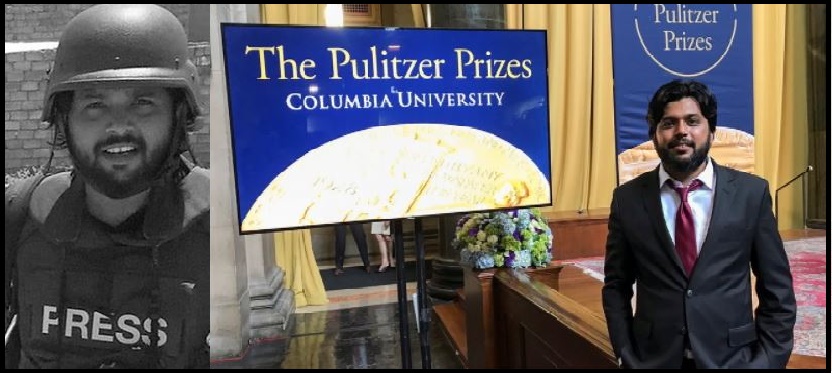
London, August 26 (HNA) – Danish Siddiqui, a Reuters journalist who won the Pulitzer Prize in 2018, has died after being caught in the crossfire between Afghan special forces and Taliban militants near the Pakistani border, where he was covering the conflict.
Siddiqui was killed on Friday after a clash between Afghan security forces and members of the Taliban broke out, with the terrorist group trying to reclaim a market in Spin Boldak, a town bordering Pakistan in southern Afghanistan. A senior Afghan commander also lost his life in the battle.
“As the Taliban’s campaign to reconquer Afghanistan was gathering pace in June, hundreds of people were dying in the fighting, and tens of thousands were fleeing. Danish Siddiqui, a 38-year-old star photojournalist for Reuters based in New Delhi, decided he wanted to help cover the story, telling a boss: ‘If we don’t go, who will?'” Hindustan Times reported.
The photojournalist had earlier been shot in the arm on Friday. According to an Afghan commander, Siddiqui had been recovering from the wound and was speaking with local shopkeepers when the fighting restarted and the journalist ultimately lost his life.
“On Sunday, July 11, Siddiqui arrived at a base of the Afghan Special Forces in the southern city of Kandahar. There he embedded with a unit of several hundred elite commandos tasked with flushing out Taliban fighters who in the previous few weeks had been steadily capturing territory. On Tuesday, July 13, Siddiqui joined a successful mission to rescue a policeman who was surrounded by insurgents. His convoy was returning when it came under fire from rocket-propelled grenades” according to Hindustan Times.
Also on rt.com Taliban claim key Afghan border crossing with Pakistan as insurgent group nets new territories
Siddiqui had been deployed earlier this week to work with the special services and cover the clashes between Afghan forces and the Taliban in Kandahar, in the south of the country.
The journalist shared his work on Twitter just two days before his passing. In a harrowing post, the Reuters journalist said that he “could feel the tension in the air as ASF [Afghan Special Forces] were expecting an imminent attack from the Taliban.”
I could feel the tension in the air as ASF were expecting an imminent attack from the Taliban. There was sporadic machine-gun fire but all hell broke loose as the Humvees reached the extraction point. pic.twitter.com/TqnnqiuTUr
Siddiqui’s death underlines the risks faced by journalists, both in the international media and in local outlets, when covering conflict and political strife. Media organizations are grappling with how best to safeguard their staff while publishing vital news in the public interest.
Globally, more than 600 journalists have been killed since 2010, according to the Committee to Protect Journalists. Afghanistan has been especially dangerous, accounting for 35 of those deaths as of early August, 28 of the local journalists.