
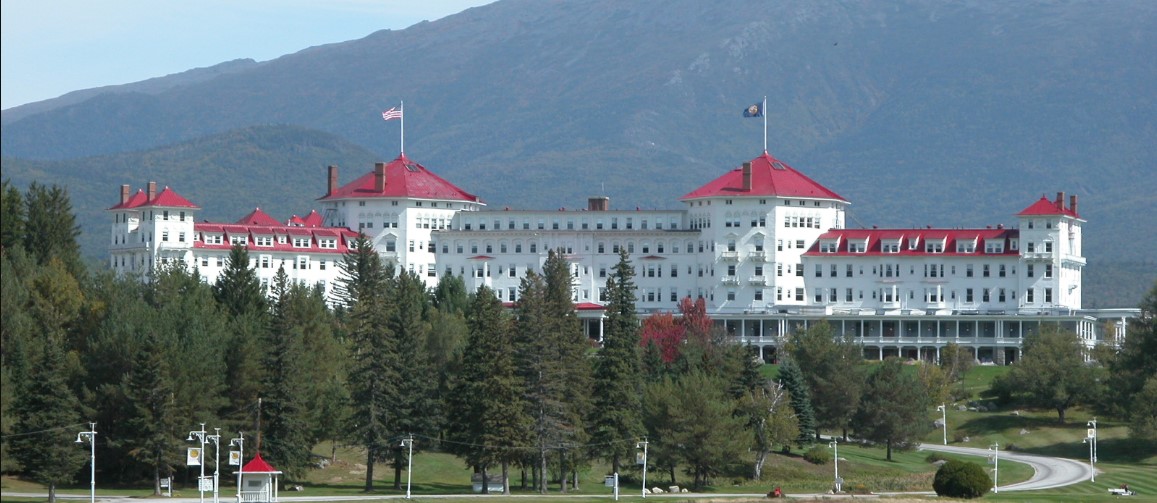
Istanbul, September 25 (Hibya) – As part of the Bretton Woods at 80 Initiative, the International Monetary Fund (IMF) and the World Bank Group will convene at Bretton Woods in New Hampshire on 26-27 September 2024 to discuss “the world economy of the future” with the participation of experts.
According to a statement made by the IMF and the World Bank, the two-day event will bring together a small and diverse group of global thinkers, including leading figures in history, international relations, political science, finance and business, at the site of the 1944 United Nations Monetary and Financial Conference (Bretton Woods Conference).
The joint statement emphasised that the meeting will be part of an ongoing series of consultations with IMF and World Bank stakeholders, which will continue with events and meetings in the coming months:
‘The meeting aims to facilitate discussion on the shape of the world economy 20-30 years from now, how multilateralism might evolve, and how the Bank and Fund can best continue to support stability and progress on a habitable planet.
Led by the Initiative’s three advisors, Patrick Achi, Sri Mulyani Indrawati and Mark Malloch-Brown, the discussions will include senior management and staff from both organisations, including World Bank President Ajay Banga and IMF President Kristalina Georgieva.
The Bretton Woods Agreement is another name for the “International Monetary Agreement” signed in July 1944 at the United Nations monetary and financial conference held in Bretton Woods, a small town in New Hampshire, USA.
After World War II, new methods were sought to determine exchange rates according to a system that would improve world trade. As a result of these studies, a new system for international payments was developed with the Bretton Woods Agreement.
With this agreement, which was attended by 730 delegates from 44 countries other than the Eastern Bloc countries, the fixed exchange rate principle was adopted for the currencies of the participating countries, and it was accepted that the value of the currency of each country participating in the agreement would be determined based on the dollar.
With this agreement, which set the rules of the international monetary system, it was decided to establish the World Bank and the International Monetary Fund (IMF), and the two organisations became operational in 1946 when a sufficient number of countries signed the agreement.