
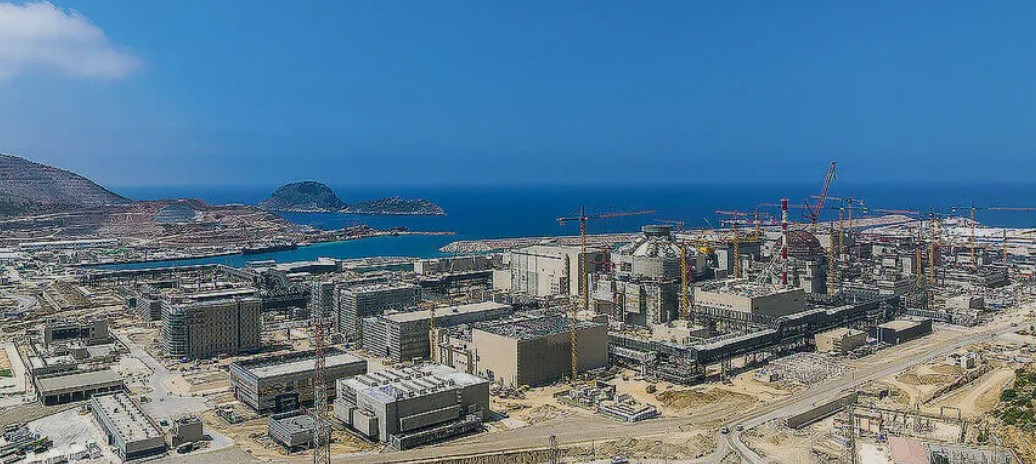
Istanbul, August 13 (HNA) – The Chamber of Electrical Engineers (EMO) of the Union of Chambers of Turkish Engineers and Architects (TMMOB), in a statement regarding preparations for the commissioning of the first unit of the Akkuyu Nuclear Power Plant (NPP), warned: “Whichever scenario unfolds, it appears that the citizens will be the ones to lose out here.”
EMO highlighted that, despite the government having repeatedly stated that Akkuyu’s first unit would be commissioned in 2026, no clear date has yet been announced. It emphasised that, although turbine tests have been completed, the unit is unlikely to be commissioned this year as the critical milestone of loading actual fuel into the reactor has not yet been reached.
In the EMO statement, which highlighted that electricity prices would rise based on the market exchange price, it was emphasised that the loss arising from Electricity Generation Incorporated (EÜAŞ) purchasing electricity at a high price and selling it at a lower price would be borne by the Treasury – in other words, ‘the taxpayer’ – that the power station’s revenue could be transferred abroad, and that the project would act as a barrier to renewable energy investments. The EMO statement also drew attention to the risks posed by cooling water discharge to the Eastern Mediterranean ecosystem and the project’s links to international diplomacy.
The EMO statement noted that, under normal conditions, the commissioning of a nuclear reactor takes between 12 and 18 months. Whilst the turbine has been brought to a ready state—a significant milestone in terms of commissioning tests—it was emphasised that the most critical threshold, namely the loading of actual fuel into the reactor and the stage known as ‘achieving criticality’, has not yet been reached, and “Under these circumstances, it appears doubtful that the first reactor at the Akkuyu NPP will be commissioned this year. If all tests yield positive results, it is likely that the unit will be commissioned in the first quarter or first half of 2027 following this stage,” it was stated.
In the EMO statement, it was stated: “Whilst the commissioning of the first unit at the Akkuyu NPP is technically imminent, we wish to once again highlight the problems our people will face and warn those responsible,” and it was added:
“First and foremost, the cooling water discharge from the Akkuyu Nuclear Power Plant carries the risk of causing a non-linear and destructive impact—exceeding critical thresholds—on the marine ecosystem in the Eastern Mediterranean, where seasonal sea surface temperatures reach 32°C, an ecosystem already operating at the limits of its biological tolerance.
Although the Environmental Impact Assessment (EIA) report obtained approval by claiming that the 0.5 °C resulting from the discharge remains below the legal limit of 1 °C, the fact that the applicable regulatory limit disregards absolute temperature thresholds reduces the water’s dissolved oxygen capacity to its lowest level whilst increasing the metabolic oxygen requirements of living organisms, and poses a risk of creating micro-dead zones.”
The statement noted that when the first unit of the Akkuyu NPP comes online, it will significantly impact the Turkish electricity system with an annual output of approximately 9 billion kWh; and that, should it operate at full load, Akkuyu would meet approximately 2.5 per cent of 2027’s consumption in terms of generation volume. It added: “In this scenario, it is clear that the Market Exchange Price (PTF), which serves as the basis for pricing in the electricity market, will rise. As is well known, the main determinants of the PTF today are natural gas and imported coal-fired power stations. Although the number of hours during which the PTF is zero on sunny days may rise to as many as 10, the electricity price that matters to the public is determined by the average PTF and the amount of incentives under the Renewable Energy Sources Support Mechanism (YEKDEM),” it was stated, and the following explanation was provided:
“Like other power stations, the Akkuyu NPP is not flexible in terms of ‘load-on–load-off’ commands, and the relevant legislation explicitly states that the entire output of the Akkuyu NPP must be fed into the grid. Akkuyu will sell 70 per cent of the output from its first unit to EÜAŞ at a rate of 12.35 cents/kWh (or 15.33 cents/kWh if Rosatom so requests), whilst the remaining 30 per cent will be offered to the market at the peak price. It is mathematically evident that this situation will raise the average PTF by a certain margin. From the citizens’ perspective, setting aside the environmental impacts of the Akkuyu NPP, the anxiety and fear caused by the risk of accidents, and the dangers of nuclear waste, the plant’s most negative impact in the short term will manifest in this way: citizens will pay more for the electricity they use.”
The statement emphasised that another impact of the plant on citizens would be ‘indirect’, noting: ‘Seventy per cent of the electricity that EÜAŞ will purchase at the price mentioned above will be sold onto the market or directly to retail and distribution companies at a price approximately half that of the purchase price — that is, at around 4–5 cents per kWh. A warning was issued that “the resulting loss will be covered by the Treasury, that is, from the taxes paid by citizens.”
In the EMO statement, which noted that the revenue generated from this would “either be used in the construction of Akkuyu’s other units currently under development or sent directly to Russia”, it was stated: “As is well known, 100 per cent of Akkuyu’s capital belongs to Rosatom, and the company has the right to transfer its entire revenue abroad.” The following warning was also issued:
“In addition to all this, it must not be overlooked that the commissioning of the Akkuyu NPP is closely linked to Turkey’s international diplomatic policy. In a Turkey that is increasingly aligning itself openly with the US and has applied to sell ballistic missiles to Ukraine, under what conditions will Russia commission this power station? Should the Akkuyu NPP be commissioned, it is also possible that the US might raise this issue in the same way as the S-400 missile defence system controversy. The Akkuyu NPP, which has so far been an expense for Russia, will begin to generate revenue for Russia once it is commissioned. It remains unclear whether the US, which forced the closure of the Nord Stream natural gas pipeline to Germany, will make a similar demand of Turkey.”
The EMO statement also emphasised that the fact that the Akkuyu NPP “will act as an obstacle to the development of renewable energy plants” is only now beginning to be recognised, and continued as follows:
“In recent days, discussions have been taking place amongst power plant investors and operators regarding which plants might face production restrictions to accommodate the surplus generation that could arise once Akkuyu comes online, and assessments are being made that the risk of production restrictions must be taken into account in new investments. We will soon find out the answers to all these questions. However, whichever scenario unfolds, it seems clear that it is the citizens who will be the losers here.”