
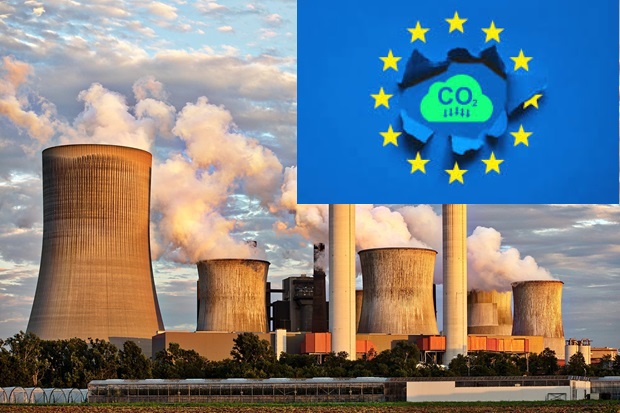
Istanbul, May 28 (HNA) – The European Council adopted a regulation establishing a framework of measures for strengthening Europe’s net-zero technology manufacturing ecosystem, better known as the “net-zero Industry Act”.
The regulation adopted on Tuesday, a key driver in boosting the industrial deployment of net-zero technologies, is a crucial step towards achieving the EU’s climate goals and reinforcing Europe’s position as a leader in industrial green technologies.
The net-zero industry act is one of the foundation stones of a new industrial policy. This legal act will help Europe lead the global race for green technologies and ensure that our contribution to the fight against climate change also reduces our dependencies, reinforces our strategic autonomy and helps us create growth and jobs in Europe.
The net-zero industry act will create favourable conditions for investment in green technologies by:
– simplifying the permit-granting process for strategic projects
– facilitating market access for strategic technology products (in particular in public procurement or the auctioning of renewable energies)
– enhancing the skills of the European workforce in these sectors (i.e. with net-zero industry academies and high-concentration industrial areas or ‘valleys’)
– creating a platform to coordinate EU action in this area
To foster innovation, the legal act proposes to create favourable regulatory frameworks for developing, testing and validating innovative technologies (known as ‘regulatory sandboxes’).
Two indicative benchmarks will measure progress towards the objectives of the net-zero industry act. Firstly, the manufacturing capacity of net-zero technologies, such as solar photovoltaic panels, wind turbines, batteries and heat pumps, reaches 40 percent of the EU’s deployment needs. Secondly, a specific target for an increased Union share for these technologies with a view to reaching 15 % of world production by 2040.
In addition, the net-zero Industry Act sets up an annual injection capacity of at least 50 million tonnes of CO2 to be achieved by 2030 in geological storage sites in the Union’s territory.