
Deniz Kılınç / Istanbul, February 14 (HNA) – European research project ArtEmis, a subsidiary of KTH Royal Institute of Techology, aims to advance in natural disaster research and create a reliable warning system for earthquakes.
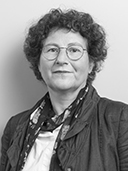
Serious earthquakes should be able to be predicted in the future – that is the goal of the European research project ArtEmis. “By combining several measurement values at the same time, we hope that research on earthquakes can take a big step forward,” says research leader Ayse Ataç Nyberg, KTH professor of physics.
The goal of ArtEmis, which has received an EU grant of 2 million Euros until 2027, is to create the conditions for a reliable warning system for earthquakes – a sensor network that will measure, among other things, the radon level in selected wells in Europe.
“We want to place over 100 detectors that measure radioactivity, water pressure, pH value and movements in the bedrock along the joints between the plates of the earth’s crust in earthquake-affected countries,” explains Ayse Ataç Nyberg.
In order to predict earthquakes, since the 1960s, the radon gas that leaks out from micro-cracks in the bedrock as a result of movements in the earth’s crust has been measured. But it has become increasingly clear that the radon content measured in the air or in the soil can be affected by temperature changes and humidity, so the researchers instead measure the values in the groundwater, according to Ayse Ataç Nyberg.
In groundwater, the measurement results of radon are more stable and reliable over time, and can also be combined with, among other things, measurements of water pressure – values that can individually signal increased earthquake risk.
“The enormous amount of collected data is managed and analyzed through AI solutions. This collaborative project between 14 institutions in Europe includes seismologists, geologists, physicists and AI researchers. We also collaborate with several municipalities in the areas that give us access to groundwater sources in caves, tunnels and wells,” she says.
Initially, measurements are carried out in joints between earth plates in Greece, Italy and Switzerland. Through universities in the various countries, the research group gets access to groundwater sources for deploying the detectors.
Ayse Ataç Nyberg points out that the research group aims to continue data collection even after 2027:
“We hope for new funding to also be able to place detectors in other disaster-stricken countries, such as Turkey.”
Ayse Ataç Nyberg grew up in Ankara, Turkey, where three large earth plates meet and create great movement in the country’s bedrock. After losing several friends in the catastrophic earthquake that struck Turkey in 1999, she has committed herself to research that can prevent such tragedies in the future.
“Everyone in this research group feels a great commitment. We will not solve the entire problem of reliable earthquake forecasting, but we can develop tools that allow us to understand how the processes work. In the future, we hope to be able to interpret all signals correctly and be able to predict catastrophic earthquakes,” she says.
The earthquake studies have began to draw attention following the two deadly earthquakes that hit Türkiye’s southeast region and Syria on February 6. The death toll has already rose above 30,000 but the search and rescue teams from all over the world are still contributing to the ongoing work after over a week.