
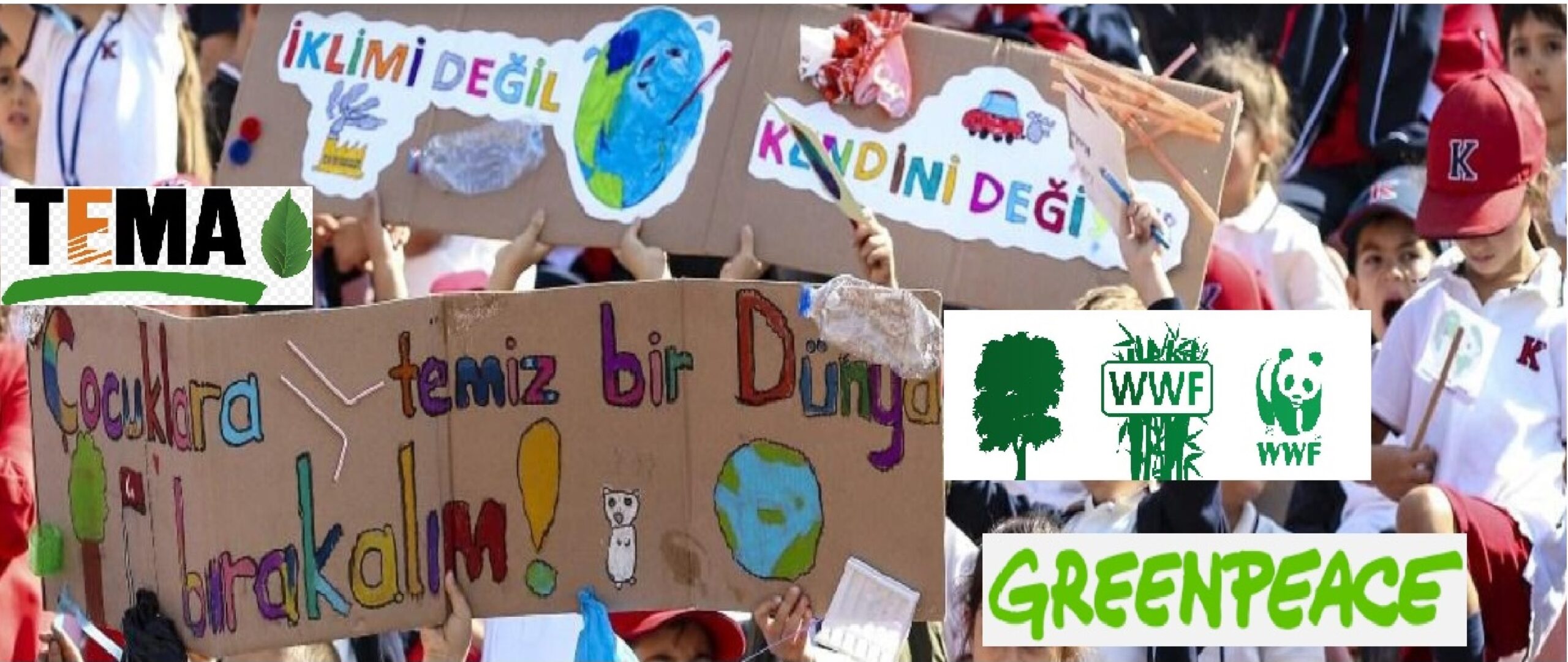
Deniz Kılınç / Istanbul, August 25 (HNA) – In Turkey, green protests could go beyond environmental issues and include demands for more inclusive and transparent governance, while climate activism could help keep the opposition alive, the country’s democratic future is still in question, according to Francesco Siccardi, a senior program manager at Carnegie Europe.
In recent years, “the rise of climate activism has galvanized global civil society” he stressed in his latest article on Carnegie Europe, adding that, “As the consequences of climate change become more visible, protests have spread to push for immediate climate action. Governments have often responded by adopting harsh measures against climate protests. In some democratic contexts, this has translated into stricter legislation against demonstrations. In authoritarian regimes, climate movements have fallen prey to the systematic reduction of the space for civil society and civic activism.”
While creeping authoritarianism makes climate activism harder in many countries, it was authoritarian leaders’ scant concern for the environment that drives citizens to mobilize, according to Siccardi, while, local communities might initially rise up to protect their livelihoods, but their protests often become a platform for political contestation, in such contexts.
“It is, therefore, instructive to examine how far climate activism can boost democratic dynamics” he underlined, adding that, “Turkey is an important case in this regard. It has suffered one of the severest democratic regressions of all countries; it has witnessed particularly active civic mobilization in response to this regression; and it is a country where ecological problems have become more serious and urgent. Drawing on a series of interviews conducted virtually in March and April 2022 with Turkish climate activists and social movement experts, this case study provides important findings and lessons for the future trajectories of green activism in authoritarian contexts.”
Siccardi said, “Turkey’s green movement has grown and strengthened over time” and added:
“It is becoming a notable vector of confrontation against authoritarian politics because of the strong link between ecological degradation and the increasingly authoritarian rule of the Justice and Development Party (AKP). But while green activism has adopted innovative tactics, it suffers from the same repressive attacks by those in power as other areas of civil society do. Direct climate action and organizing is spreading but is not yet strong enough to have a major impact at the political level in Turkey.”
Green activism was one of the most popular platforms for citizens’ mobilization in Turkey, but it was not the only one, according to Siccardi: “The peace and human rights movements remain relatively active, and the feminist movement is the only one that still manages to gather large crowds. In the last few months, citizens have mobilized to protest the country’s economic crisis and the government’s fiscal policy, which are eroding their salaries.”
“Three features set the Turkish green movement apart,” he said, and described them as follows:
“The first is the nature of the environmental threats that push citizens to mobilize. Pollution, ecological degradation, and climate change threaten the physical environment in which communities have prospered for centuries and are a powerful driver for those communities’ mobilization. Because of this, local groups resisting large infrastructural and environmental extraction projects have always been among the liveliest parts of the Turkish green movement, having emerged in the 1970s and 1980s in reaction to the uncontrolled exploitation of natural resources that successive governments promoted to sustain the country’s accelerated industrialization.
“Second, the Turkish green movement is extremely varied. Local resistance movements keep mushrooming across the country. A professionalized environmental civil society emerged in the 1990s, when international organizations such as the World Wide Fund for Nature (WWF) and Greenpeace opened Turkish offices and Turkey’s largest domestic environmental group, the Turkish Foundation for Combating Soil Erosion, for Reforestation and for the Protection of Natural Habitats (TEMA), was established.
“Over the years, small nongovernmental organizations (NGOs) have been created in Turkey to conduct local, network-oriented activities. International networks have started to coordinate their climate and environmental advocacy, while national platforms have led the work of campaigning against the use of nuclear power and coal. Student movements have mobilized the youth to call for better climate policies, and a new green party has been established.
“In this multiactor context, the term ‘green activism’ is meant in this article as a loose term to include the entirety of Turkey’s green civil society, from local protest movements to professional or community-oriented civil society organizations.
“Third, environmental protests stand out because they often relate to more than environmental threats. In a creeping authoritarian system such as that created in Turkey by the AKP, poor environmental policies are functional for maintaining the government’s tight grip on power. This situation provides the green movement with a larger platform around which other social forces can coalesce. Much green activism today relates to the government’s megaprojects: By calling out the government’s rent-seeking in its large infrastructure projects, activists point to corruption. By protesting the lawlessness of environmental impact assessments, they highlight the lack of the rule of law. And by denouncing a lack of public consultations, they signal bad governance.”