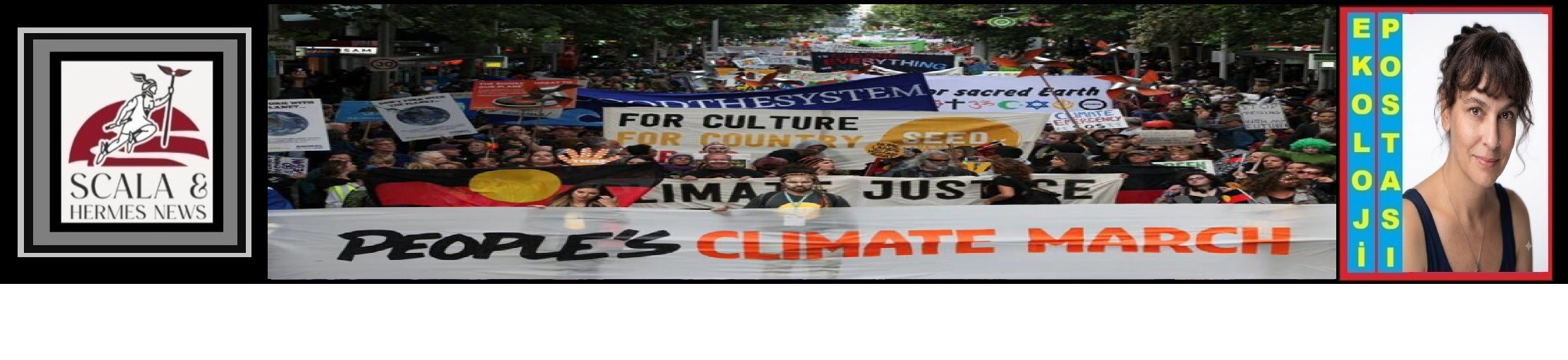
PSC: A climate agenda for the people, not for corporations


The People’s Climate Summit (PCS), to be held in parallel with the United Nations Climate Change Conference COP31, will take place in Antalya from 14 to 18 November. Organised under the leadership of the Climate Justice Coalition, the Ecology Union and the Turkish Environmental Platform, the summit will open up discussions on issues such as the phase-out of fossil fuels, energy democracy, ecological destruction, food sovereignty and climate debt, based on the demands of the people.
Whilst COP31, organised under the United Nations Framework Convention on Climate Change, will bring together states, international organisations and negotiating delegations in Antalya from 9 to 20 November 2026, a different climate gathering will also take place during the same period. PCS will be held at the Mimar Sinan Congress Centre in Antalya from 14 to 18 November.
However, the agenda of this summit is not limited solely to reducing greenhouse gas emissions or countries’ climate commitments. The organisers aim to open up a discussion on the economic and political systems underlying the climate crisis, the fossil fuel industry, the impact of corporations on nature, and the social consequences of ecological destruction.
From three environmental organisations to an international solidarity network
The preparatory process for the People’s Climate Summit began on 16 December 2025 with a meeting between the Climate Justice Coalition, the Ecology Union and the Turkish Environment Platform. The three organisations decided to organise an alternative gathering, running concurrently with COP31, which would centre on people’s needs and demands for climate justice.
The preparatory process subsequently evolved into a broad solidarity network comprising environmental and human rights organisations, trade unions, local resistance movements, youth groups and various social struggle movements.
According to the summit’s announcement dated 21 October 2026, approximately 300 international and over 200 local organisations are supporting the event. Plans include over 130 organisations organising events, speakers from 34 countries taking part, and the staging of around 150 thematic sessions and cultural and artistic events.
According to the organisers’ approach, the climate crisis is not merely an environmental issue; it is a social crisis directly linked to labour, housing, health, food, democracy and human rights. For this reason, the summit aims to bring together ecological movements with women’s organisations, trade unions, youth movements, urban struggles and anti-war groups on a common platform.
Issues excluded from the COP31 negotiations will be brought to the fore
One of the key starting points of the People’s Climate Summit is the criticism that international climate negotiations do not adequately represent the needs of the communities most affected by the climate crisis.
Whilst questioning the influence of fossil fuel companies and major capital groups on climate policies, the summit organisers will also monitor issues such as carbon markets, climate finance and corporate environmental responsibilities.
The following topics will be addressed in particular during the monitoring and evaluation meetings relating to the COP31 process:
- Countries’ greenhouse gas reduction commitments and the extent to which these are being implemented.
- The impact of carbon markets and emissions trading mechanisms on the climate crisis.
- To whom climate finance is channelled and under what conditions.
- The climate debt of countries with high historical emissions.
- Compensation for the loss and damage suffered by countries affected by the climate crisis.
- The responsibilities of governments and companies regarding the phase-out of fossil fuels.
- The participation of local communities and peoples in decision-making processes regarding climate policies.
The Summit adopts a critical stance, particularly towards carbon trading and ‘greenwashing’ practices where companies present themselves as environmentally friendly without fulfilling their environmental responsibilities. Organisers argue that the climate crisis cannot be reduced to a technical issue to be managed through market mechanisms.
The call for a coal phase-out and energy democracy
One of the summit’s most concrete demands is the end of fossil fuel-based energy production. In the anti-coal campaign text published by the People’s Climate Summit, it is demanded that the process of closing existing coal-fired power stations be initiated immediately, that the expansion of new coal mines be halted, and that permits granted for new coal-fired power stations and mining projects be revoked.
However, the summit emphasises that the transition away from fossil fuels must not be limited solely to changing the method of energy production. The demands also include the protection of the rights of workers in the coal mining and thermal power sectors, the safeguarding of their livelihoods, and the ecological and economic revitalisation of coal-mining regions.
Arguing that the cost of the energy transition must not be borne by workers and low-income groups, the summit supports renewable energy models managed by local communities and public energy policies.
The Labour Assembly, to be held on 12–14 November at the call of Trade Unions for Energy Democracy (TUED), will also discuss the phase-out of fossil fuels, energy poverty, workers’ rights and a just transition.
From mining to the right to water, from the rights of nature to food sovereignty
The summit’s agenda is not limited to energy policies. Mining activities, deforestation, the destruction of water resources, the loss of agricultural land and the ecological impacts of industrial agriculture will also be discussed.
The meetings, hosted by the ‘We Won’t Give Up Our Land’ campaign, will bring together local ecological resistance movements. The experiences of communities fighting against mining projects, alongside issues such as the right to water and land, the right to the city, housing and public health, will be addressed from a perspective of collective struggle.
The summit’s four main sessions are as follows:
15 November: The Rights of Nature Against Ecological Destruction
16 November: Phasing Out Fossil Fuels and Energy Democracy
17 November: Democracy, Anti-Militarism and Peace
18 November: Food Sovereignty and Agroecology
Under the heading of food sovereignty, alternative production models to industrial agriculture, agroecology and the right of peoples to have a say in their own food systems will be discussed. In the sessions on the rights of nature, the legal dimension of ecological destruction and those responsible for the crime of ecocide will be brought to the fore.
Climate justice will not be addressed in isolation from war, poverty and social inequality
The People’s Climate Summit highlights that the consequences of the climate crisis do not affect all sections of society equally. Workers, peasants, women, indigenous peoples and the urban poor are identified as being amongst the groups bearing the brunt of the crisis.
For this reason, the summit’s agenda includes not only ecological issues but also wars, forced displacement, gender inequality, care work, housing and access to essential public services.
Criticism of the allocation of resources to the war economy rather than to social services and ecological transition is also a key topic of the gathering. The ecological and humanitarian consequences of the occupation and war in Palestine, as well as the link between the anti-militarist struggle and climate justice, will also be discussed.
Plastic pollution, the waste trade, zero-waste policies and the fight against nuclear energy are also among the summit’s other agenda items.
Demands will be taken from the streets to the international negotiating table
The People’s Climate Summit will begin with a march and rally in Antalya as part of the 14 November Global Day of Action. Organised at the call of the Antalya Labour and Democracy Forces, the event is expected to bring together social movements from Turkey and various other countries.
During the sessions from 15 to 18 November, the aim is to share local struggle experiences on an international scale, develop alternative climate policies, and bring the people’s demands into the COP31 process.
The summit’s central argument is that a solution to the climate crisis is not possible through policies determined solely by states and corporations. The organisers argue that climate justice can be achieved through local resistance, labour struggles, social solidarity and democratic participation.
Whilst the commitments of nations and climate finance are being discussed in the official COP31 negotiation halls, the People’s Climate Summit in Antalya is raising another question: to what extent do the people who are paying the price for the climate crisis have a say in determining the solution?
The Summit’s answer is clear: climate policies must be centred not on corporate profits, but on the right to life and the future of the people.